


|
|
|
- Tarot Tip: The 8 Questions a Querent Is “Really Asking”
- Wald's Words of Wisdom
- Product Spotlight: Court Cards Study Guide
- Upcoming Events
 This month you came from:
Croatia, Spain, the United Kingdom, and the United States!
|
There are hundreds of things that scare people. There are a few well-known fears such as Acrophobia (fear of heights) and Claustrophobia (fear of confined spaces). And there are some lesser known ones such as Arachibutyrophobia (fear of peanut butter sticking to the roof of the mouth) and Nomophobia (fear of being without a mobile phone). I think a lot of us can relate to that one!
Recently, I came across another one that many people suffer -- Decidophobia.
Decidophobia is just as it looks -- a fear of making decisions. When faced with important decisions, many of us probably experience heightened anxiety. What if we make the wrong one?
This is one phobia where tarot can make a difference. It can help you see both the details and the larger picture around major decisions. Wald and I created a spread that excels in doing this: The Double-Edged Sword Spread. We call it that because the Suit of Swords contains the energy required for the clarity and discrimination needed to make decisions.
This spread is useful anytime a choice must be made between one of two real options in relationships, job offers, moving locations, career paths, etc.
The layout is very simple. After shuffling the cards, cut the entire deck into two piles. Assign one pile for Choice #1 and the other pile for Choice #2. From the first pile, draw five cards and place them in a vertical line on the table. Draw five more cards from the second pile and place them in a second vertical line, next to the first.
Each column is read as a multi-faceted picture of the energies and likely outcome of that particular path. A chronology of events may suggest itself but try not to approach the reading as a series of chronological steps — look at each group of five cards as a whole.
Sometimes the answer will be obvious. More often though, both options will have their pros and cons. The cards will verify things you already know and point out things you may not have considered. Compare the two sides and notice the strengths and trouble spots in each.
In addition to any objective information you receive, the images in the cards have the power to evoke emotional responses. Consider these responses as well when making your decision.
When you see the strengths and challenges of each path laid out in front of you, making a well-informed decision won't be so scary.
And one more thing...

|
If you haven't visited our website in awhile, now's a good time. We have lots of tarot goodness to offer so it's a great way to sharpen your decision-making skills!
Spread the experience of tarot - share this newsletter with other Tarot Enthusiasts!
|
|
The 8 Questions a Querent Is “Really Asking”—
©️2026 Cheryl Ryder, Albuquerque Tarot Tribe
A lot of people come to tarot with questions about love, money,
work, health, timing, or relationships.
And beneath the surface question—
“Is my partner coming back?”
“Should I change jobs?”
“What’s going on here?”
—there’s always something deeper being asked.
Here’s the truth: Tarot doesn’t actually answer topics.
It answers human needs.
When a reading feels accurate, comforting, or clarifying, it’s usually because the reader responded to the real question beneath the words. Learning to hear that question—and speak to it directly—can transform both your readings and your confidence as a reader.
Here are the eight real questions every querent is asking, and simple ways you can begin answering them. Use these 8 questions as a guide or as a checklist during your readings - they apply to any question asked, regardless of the topic: love & relationships, jobs & careers, money & resources, home & living situations, health & well-being, life purposes, meaning & directions, timing & outcomes, crossroads & decisions.
......................................................................................................................
1. Where is this going?
(need: Direction/Trajectory)
In other words, they are saying:
“I don’t need every possible answer — I just need to know whether I’m walking toward something or just going in circles.”
Tarot restores directional orientation by revealing the larger trajectory a situation is moving toward, even when the details are still unclear.
How a reader might begin:
“I’m getting a sense of the direction this situation is heading, even if the full picture isn’t visible yet.”
......................................................................................................................
2. What options do I have?
(need: Possibilities/Options)
What the querent is saying is:
“It feels like I’m stuck, but part of me suspects I’m just not seeing the whole picture, and it makes me nervous that I might be overlooking something critical.”
Tarot expands awareness by surfacing alternatives, connections, and openings that were previously unseen or dismissed.
How a reader might begin:
“Let’s open this up a bit—there may be more possibilities here than it feels like right now.”
......................................................................................................................
3. How does this connect to my past?
(need: Continuity/Consistency)
What the querent is saying is:
“This situation feels familiar, and I want to understand why it keeps showing up in my life.”
Tarot stabilizes uncertainty by linking the present moment to lived experience, memory, and recognizable patterns over time.
How a reader might begin:
“This feels like a pattern you’ve encountered before—let’s see what your experience already knows.”
......................................................................................................................
4. What can I do right now?
(need: Physical Engagement/Interaction)
What the querent is saying is:
“I’m feeling overwhelmed by overthinking — tell me one thing I can actually do
today.”
Tarot grounds insight by identifying what is immediately actionable in the current environment.
How a reader might begin:
“Let’s focus on what’s available to you right now, in real, practical terms.”
......................................................................................................................
5. What choice lets me stay true to myself?
(need: Values Alignment/Congruence)
What the querent is quietly saying is:
“I can make this work… but I’m afraid I’ll lose myself if I do.”
Tarot clarifies inner alignment by highlighting which options honor personal values and which erode them.
How a reader might begin:
“Let’s check in with what truly matters to you in this situation.”
......................................................................................................................
6. How will this affect my relationships?
(need: Interpersonal Harmony/Impact Concerns)
What the querent is quietly saying is:
“I’m not just choosing for just me — I’m choosing inside a web of people I care about.”
Tarot widens perspective by illuminating how choices influence emotional and relational dynamics beyond the individual.
How a reader might begin:
“Let’s look at how this choice impacts the people and relationships around you.”
......................................................................................................................
7. Can this make sense?
(need: Coherence/Clarity)
What the querent needs:
“Everything feels scrambled, and I need it to add up somehow.”
Tarot reduces mental strain by organizing scattered information into a story that holds together logically.
How a reader might begin:
“Let’s slow this down and see how the pieces actually fit together.”
......................................................................................................................
8. What’s the next step?
(needs to: Organize/Structure/Choreograph reality)
What the querent needs:
“I need a workable plan — with steps I can take that I know will succeed.”
Tarot translates understanding into speech and movement by identifying the next steps that can be both practical and sustainable; A logical and rational “to-do” list.
How a reader might begin:
“Let’s let the cards help us with setting the next workable steps.”
......................................................................................................................
Why Understanding These Hidden Questions
Matters for Tarot Readers
When a reading feels “off,” it’s often not because the cards were wrong—it’s because the real question went unanswered.
Instead of asking only:
“What does this card mean?”
Try asking yourself, “Which of these needs is the querent really trying to meet?” Ask some clarifying questions of your querent to confirm what they are seeking to gain.
From the reading: Direction, Options, Continuity, Interaction, Alignment, Harmony with others, Coherence, Organization, and/or a combination. When you answer that question, the cards almost read themselves.
......................................................................................................................
A Final Thought
Tarot works best when it speaks to the unmet human needs that are driving uncertainty about the future. When we learn to listen for the question beneath the question, our readings become clearer and far more effective—for both ourselves and our querent.
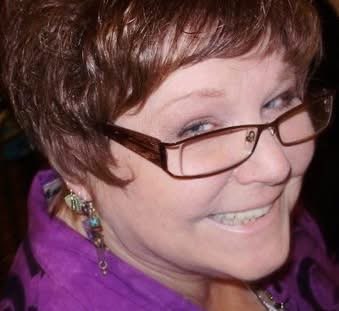
About Cheryl Ryder:
|
60-years of tarot use and study, a tarot workshop developer and the leader of the Albuquerque Tarot Tribe Meetup Group for the past 12 years. Cheryl has grown the group from 150 members to over 1200 using innovative and interactive teaching methods.
You all know her: a 10-year Readers Studio veteran, 7 years of Coordinating the Tarot Ambassador Team, occasional First-Timer Initiator, Merchant Faire Vendor, and last year, in 2024, the Facilitator of the Sunday morning Tarot Incubator Discussions.
Cheryl’s ongoing programs and discussion groups on the Albuquerque Tarot Tribe’s platform (open to anyone interested in tarot globally) continue to inspire people to expand and deepen their learning of tarot and their worlds.
https://www.meetup.com/the-albuquerque-tarot-meetup-group/
To submit a question to be answered in a future issue of Tarot Tips, send us an email at tarot@tarotschool.com
|
|
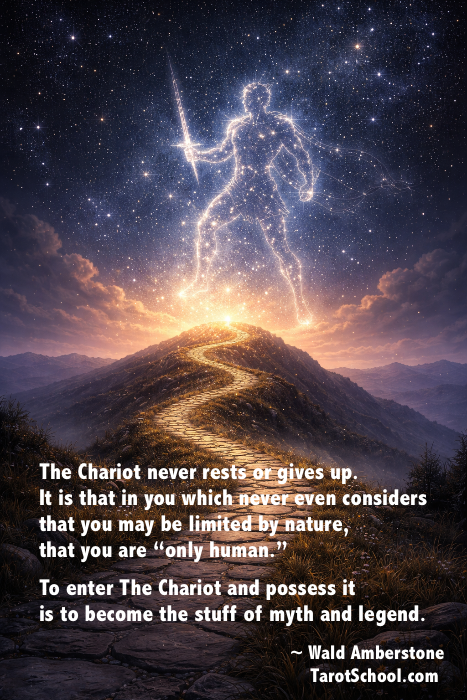
Wald's Words of Wisdom
|
|
|

|
COURT CARDS: THE FOURTH ARCANUM
a Tarot School Study Guide
Tarot is full of mysteries and depths. Every card comes in layers many deep. Cards can be combined into all sorts of meaningful groups that make them especially significant in different ways. When you play with tarot long enough, you literally start seeing things.
Court Cards are a group unto themselves. What, exactly, makes them different in their essence from the other cards? The answer is that they are an Arcanum, a formal mystery, a whole separate secret unto themselves.
The Aces are are a secret like that. They are the geological platform of the elements on which everything rests — the secret roots of the world.
At their deepest, underneath and supporting all their standard meanings, the numbers 2 – 10 of the Minor Arcana also form a mystery, which is why they are called Arcana. At that level, they are ways to mastery of self and world.
The Majors are tarot's version of the arcane architectural principles of creation.
Court Cards are avatars, incarnations in human form of a mysterious intention, which is also distilled human intention, potentially the highest, strongest intention you are capable of. They are energies that do things. Court Cards are not about things that just happen. They are about things that happen because of you. They are intended to be personal.
The uses of Court Cards go far beyond their meanings in a reading. In this study guide, using an original Tarot School tarot psychology technique called the Complete Court Card Array, we'll start to explore what makes the Court Cards a mystery — your personal mystery, an Arcanum in their own right and in the truest sense of the word.
Format: downloadable pdf $7.00
|
|
Esoteric Insights
TAROT IS A LANGUAGE
By Wald Amberstone
A student of ours recently asked me if tarot was science, and if not, why not?
My answer was no, tarot is not science, at least not for me. Instead, for me at least, tarot is a symbolic language made of numbers, names, imagery and a menagerie of beings and objects with magical references and esoteric attributions.
These are the equivalent of the letters of a symbolic language. They combine to make the equivalent of words in that language, which in turn combine to make sentences. In the same way as ordinary speech, this inventory of magical communication is regulated by a strict grammar. Its rules and conventions of usage describe and create a magical world only loosely related to the everyday world we all share.
Language is the single most powerful tool human beings have ever created. It permits the sharing of knowledge. It asks and answers every question. It assembles whole worlds and gives each of us a native community, a sense of belonging, and gives mind, body, heart and spirit separate dialects that combine to give each of us a unique personality and identity, destiny and personal drama.
For me, tarot is a language like that.
About the author:
A dedicated an innovative teacher, one of the founders of The Tarot School, Wald Amberstone has been working with tarot since 1959, and with symbols, play and magic even longer than that. He prefers the private paths to the public thoroughfares of his craft, and enjoys the company of fellow travelers when he can get it.
|
|
Mind Your Own Business
ATTRACTING REPEAT CUSTOMERS
Some tips to foster a loyal clientele
By Patti Woods
I don’t know exact numbers, but I can confidently say that the majority of my clients are return customers. Some schedule monthly sessions, while others see me once a year (usually on their birthday or around the start of the new year). It’s a wonderful thing to have an established clientele, not only for the security, but also for the connection. For me, the joy of reading the cards is the opportunity to get to know others on a deeper level.
While I try to practice good spiritual hygiene and don’t get personally involved in clients’ lives, I do appreciate hearing updates and resolutions. A tarot reading rarely ends when the cards are put away. So having familiar faces sign up for readings is a true joy and large part of why I do what I do.
So how exactly does one go about getting repeat customers? The obvious answer is by providing a valuable service. Being attentive, professional and helpful are all attributes that make a great reader. But there are some other ways to let your clients know that you value them.
Here are some things I’ve done in the past that I believe add value to my readings:
Customer referrals. After someone has had a reading, I’ll send them a code to share with a friend for a discount. If the friend books a session, the original client will also get a discount.
Loyalty points. While I discourage dependency upon readings, I do acknowledge that sometimes people like to do a check-in or tune-up. In these cases, I’ll offer them a free reading after a certain amount of sessions.
Birthday cards. If you keep track of clients’ birthdays, it’s a thoughtful gesture to send a birthday card or email.
Surprises. Every year, I send my top clients something for Halloween– a decoration, a treat, a special card.
Discounts. If you teach classes or host events, a discount can be offered to your loyal clients.
Access to exclusive live videos. If you have an online presence, a “VIP” live event can make your customers feel extra special.
Often it's the little things in life that bring us joy. Making the extra effort in your tarot business can make your client feel special and, as an added bonus, it just may foster a loyal relationship for you. I encourage you to try one of these ideas, or come up with one of your own. Report back and let us know how it works.
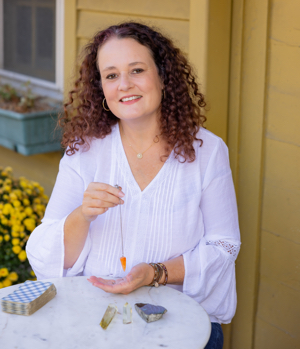
About Patti:
|
Patti Woods is a writer and tarot reader with over 20 years of experience in the publishing industry. Having served as an editor for both newspapers and magazines, she transitioned into freelance writing, contributing hundreds of articles to major publications such as The Boston Globe, Business Insider, Wine Spectator, Parade Magazine, The Week, Christian Science Monitor, Vegetarian Times, and Health, among many others.
In addition to her writing career, Patti is the founder of Mind, Body & Tarot, a business featured in Business Insider, Reader's Digest, Good Housekeeping, Fodor's Travel, and more.
She is also the author of Lost Restaurants of Fairfield, published by Arcadia/The History Press, and has contributed to several anthologies, including Chicken Soup for the Soul.
Learn more about her services and offerings at www.pattiwoods.com.
Facebook: https://www.facebook.com/groups/boozytarot
IG: boozy_tarot
|
|
Upcoming Events: 
Tarot Salon on Zoom!
7:00 – 9:00 pm EST
Our popular Monday night classes are held over Zoom so you can attend no matter where you live.
Classes are recorded and all levels of experience are welcome!
MARCH 2026:
2 - Symbols of the Wheel of Fortune
9 - Symbols of Justice
16 - Symbols of The Hanged
Man
23 - Time, Space and Tarot
30 - The Power of Intent
Get on the notification list to see what we'll be teaching each week.
|
|

Readings with Ruth Ann
Running The Tarot School with Wald keeps me pretty busy, but I still love giving readings! My specialty is using your Birth Cards
and Elemental Array (techniques Wald and I have developed) in conjunction with random draws to give you an extremely personalized and powerful reading.
If you are familiar with the Tree of Life, you may request a Birth Cards Synastry Reading. I will compare your Birth Cards with those of one or two others to give you a deeper understanding of your relationship with them.
I excel at giving Readings for Readers so if you're always giving readings to others, let me help you with some self-care for a change!
|
|


|
|
|

|